Downtown, The Avenues, Sugar House, East Central, Rose Park, and Foothill. Comprehensive response for residential shingle blow-off, tile crack repair, and commercial flat roof ponding. Crews maintain 24/7 staging out of our central Salt Lake administrative facility.
Explore Salt Lake Master Desk ›
Pepperwood, Hidden Valley, East Bench, and Little Cottonwood Canyon gateway. Fast response for high-wind shingle peel, low-pressure steam ice dam channeling, and foothill snowload mitigation.
Explore Sandy Hub ›
SunCrest alpine estates, Corner Canyon, and Point of the Mountain wind corridor. Specialized high-wind batten tarping, heavy snowload clearing, and valley flashing restoration.
Explore Draper Hub ›
Jordan Landing, Oquirrh foothills, and residential subdivisions. Rapid emergency batten tarping, winter leak containment, and pipe boot upgrades for single-family homes.
Explore West Jordan Hub ›
Daybreak master-planned tile and shingle communities, Glenmoor, and Bingham Creek. Precision tile crack repair, chimney cricket rebuilds, and ice dam steaming.
Explore South Jordan Hub ›
Murray & Millcreek Coverage
Central valley historic districts, mature tree canopy debris clearing, chimney counter-flashing restoration, and rapid emergency leak containment across Murray and Millcreek.
Call Dispatch: (888) 208-4155 ›
Wasatch Front Topographical Microclimates & Structural Engineering
The Salt Lake Valley encompasses extraordinary topographical variation within a 20-mile radius—from the 4,200-foot valley floor along the Jordan River to the 5,500-to-6,000+ foot mountain foothills of Draper, Sandy, and the Wasatch canyons. This elevation gradient creates sharply localized meteorological zones that subject roofing assemblies to drastically different failure modes.
In high-elevation communities like SunCrest and the Sandy benches, roofs must support heavy snowpack that can exceed 40 to 60 pounds per square foot during major lake-effect storms. These loads demand heavy timber framing, engineered rafter sizing, and rigorous ice dam mitigation. Conversely, in the valley floor communities of West Jordan, South Jordan, Murray, and Millcreek, roofs are stressed by severe canyon wind shear and intense diurnal freeze-thaw cycles that cause thermal fatigue and brittle fracture in standard organic felt underlayment and asphalt shingles.
In mature central communities such as Murray and Millcreek, dense deciduous and evergreen tree canopies deposit heavy pine needle and leaf debris into roof valleys and gutter troughs. When winter snowpack falls, this organic debris acts as an absorptive sponge, damming water runoff and accelerating rotting along eaves and chimney counter-flashings.
By maintaining a regional network of independent, licensed Utah DOPL contractors, Roof Expert USA ensures that property owners receive service from technicians who understand the specific building codes, snowload requirements, and wind uplift dynamics of their exact neighborhood. Furthermore, all dispatched contractors strictly adhere to Utah State Building Code amendments, installing ASTM D1970 self-adhering modified bitumen underlayments across vulnerable eaves, valleys, and wall flashings.
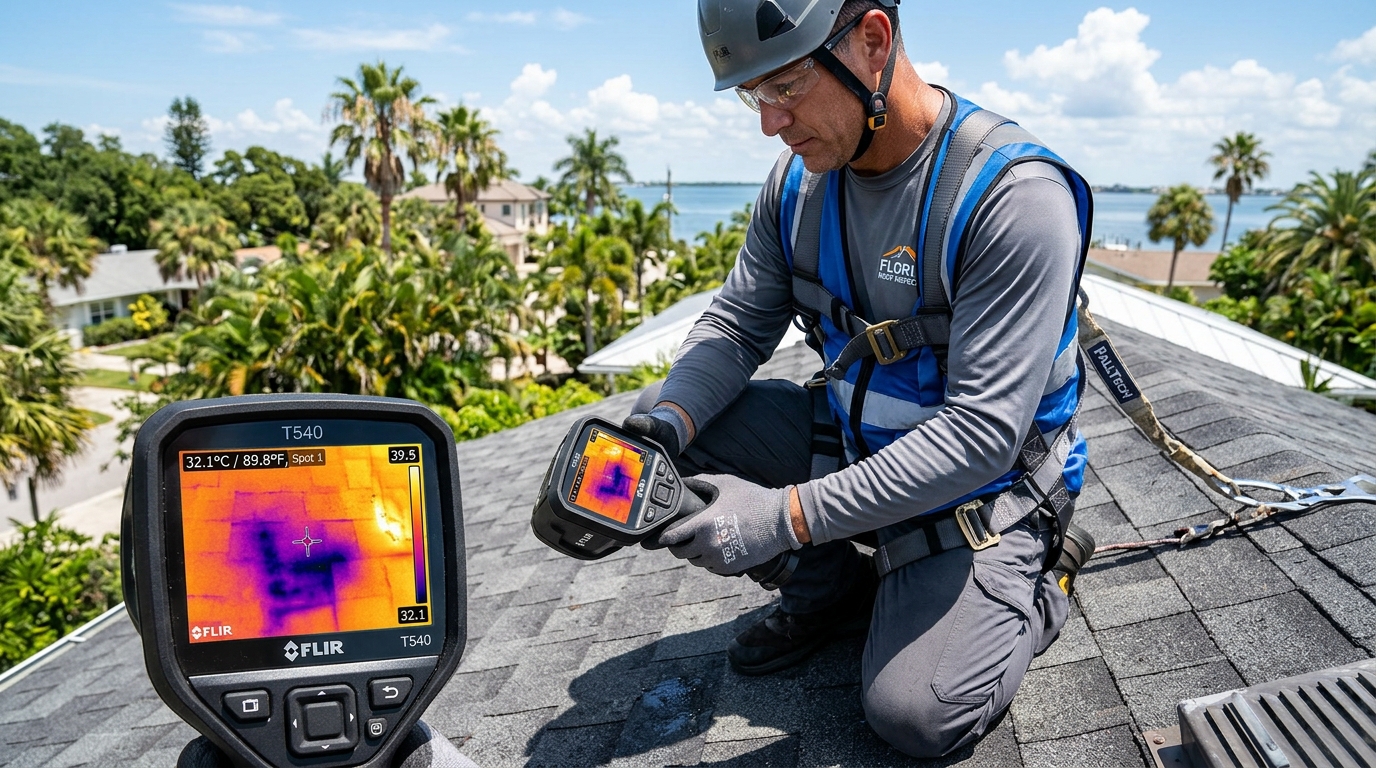
Whether dealing with sudden winter freeze-thaw water penetration, heavy pine needle accumulation in alpine valleys, or emergency batten tarping following 80 MPH downslope canyon gusts, property owners can rely on our centralized 24/7 telephone dispatch platform for instantaneous response with zero online waiting. Dispatched technicians arrive in fully equipped emergency vehicles carrying calibrated FLIR infrared thermal cameras, electronic moisture meters, low-pressure steam wands, heavy-duty 10-mil woven poly tarps, and dimensional SPF 2x4 lumber. All repairs are executed by verified Utah DOPL licensed contractors in strict accordance with municipal building codes and homeowner insurance mitigation standards.